

Imagine standing on the sunlit deck of a massive ocean liner, a cocktail in hand, watching the coastline fade as you anticipate a week of relaxation in the Caribbean. For millions of travelers, this is the vacation experience that drives the industry, yet few pause to consider the legal reality they enter the moment they step aboard. In 2026, the cruise industry continues to expand, but so does the complexity of the regulations governing it; for instance, recent updates for travelers include new strict policies regarding embarkation times and health safety, signaling a shift toward more rigid operational structures.
Once a ship leaves port, the familiar laws of your hometown no longer apply. You have entered a jurisdiction governed by centuries-old maritime law and a ticket contract that acts as a powerful liability shield for the cruise line. These contracts are often filled with clauses designed to protect the corporation rather than the passenger, a fact underscored by the 17.7 significant operational incidents that occurred annually on average between 2009 and 2019. Understanding the fine print before you sail is not just about being a smart consumer; it is a critical step in protecting your future should the unexpected occur on the high seas.
The Fine Print: Deconstructing Your Cruise Ticket as a Binding Legal Contract
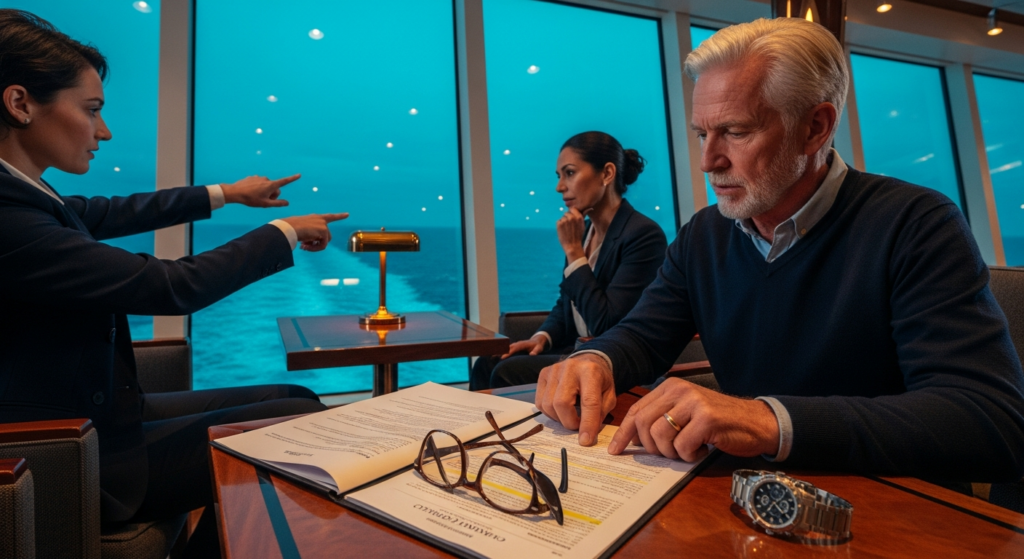
Most passengers view their cruise ticket merely as a boarding pass, but in the eyes of the court, it is a binding contract with terms that significantly curtail their ability to seek justice. Unlike a typical service agreement, these contracts often supersede state laws, creating a unique legal environment that favors the cruise operator. Recent legal battles, such as the Supreme Court case heard in February 2026 regarding cruise line liability and risk evaluation, highlight just how aggressively these companies defend their interpretations of maritime statutes to limit financial exposure.
Forum-Selection Clauses: Why You Can’t Sue Where You Live
One of the most restrictive elements found in nearly every cruise ticket is the “forum-selection clause.” This provision dictates that any lawsuit filed against the cruise line must be litigated in a specific court designated by the company, regardless of where the passenger lives or where the injury took place. For the major cruise lines, this is almost exclusively the federal or state courts in Miami or Fort Lauderdale, Florida. This requirement imposes a significant logistical and financial burden on injured passengers who may reside thousands of miles away, forcing them to hire local counsel and travel for legal proceedings. The courts generally uphold these clauses, viewing them as reasonable for companies operating globally, despite the hardship they cause to individual victims.
Strict Time Limits: A Severely Shortened Statute of Limitations
Perhaps the most dangerous trap for the unwary traveler is the statute of limitations. While you might expect to have several years to file a personal injury claim, maritime law allows cruise lines to contractually shorten this window to just one year. As codified in 46 U.S.C. § 30526, cruise lines are permitted to set a one-year deadline for filing lawsuits and can require written notice of the claim within six months of the incident. Missing these deadlines by even a single day can result in the complete dismissal of a case, leaving the victim with no recourse for their medical bills or suffering.
| Legal Aspect | Standard Land-Based Law (e.g., Car Accident) | Maritime Law (Cruise Ship Injury) |
| Statute of Limitations | Typically 2-4 years, depending on the state. | Often just 1 year from the date of the incident. |
| Notice Requirement | Generally not required to file a lawsuit. | Must provide written notice to the cruise line, often within 6 months. |
| Jurisdiction (Venue) | Lawsuit filed where the accident occurred or where the defendant resides. | Lawsuit filed only in the location specified in the ticket (e.g., Miami, FL). |
| Governing Document | State and local laws. | Federal Maritime Law and the binding cruise ticket contract. |
Evolving Legal Landscape for Passenger Safety
Maritime law is not a static field; it shifts as legislators attempt to close gaps in passenger and crew protection. For example, the Safer Seas Act has recently introduced a federal statutory definition of harassment, although critics argue the definition leaves psychological abuse in a legal gray zone. Furthermore, new global rules introduced in 2026 now require mandatory training for seafarers to prevent sexual harassment and bullying, demonstrating a slow but necessary evolution in industry standards that passengers should monitor.
Common Risks Beyond Dining: Onboard Dangers and Next Steps
While cruise lines market an image of carefree luxury, the environment aboard a moving vessel presents unique physical risks. The combination of ocean swells, wet surfaces, and thousands of people in confined spaces creates a setting where accidents are statistically inevitable. In fact, historical data show that slips, trips, and falls account for nearly 45% of all injuries aboard cruise ships, far outpacing other types of incidents. Being aware of these common dangers is the first line of defense for any traveler.
Slips, Trips, and Falls: The Most Prevalent Onboard Hazard
The most frequent accidents involve passengers slipping on wet pool decks, tripping over raised thresholds in cabins, or falling on poorly lit staircases. These are not minor mishaps; they often result in fractures, head trauma, or spinal injuries that require emergency evacuation. The risk is compounded by the ship’s motion, which can turn a minor stumble into a severe fall. The prevalence of these injuries—occurring at a rate of 0.8 injuries per 1,000 passenger-days—highlights the necessity for constant vigilance, particularly in high-traffic areas like dining halls and lido decks, where spills are common and often go unattended for too long.
Illness Outbreaks and Assaults: Hidden Risks on the High Seas
Beyond physical injuries, passengers face biological and criminal risks that are often underreported in glossy brochures. The CDC reported 21 gastrointestinal illness outbreaks in just one month. More alarmingly, the risk of violent crime is a serious concern; in 2023 alone, there were 131 alleged sexual assaults and rapes reported on cruise ships, a significant increase from the previous year. These statistics serve as a stark reminder that a cruise ship is effectively a floating city, yet one without a traditional police force, making personal safety and awareness paramount.
How to Respond Immediately After a Cruise Ship Accident
If you or a companion is injured, the actions you take in the first hour can determine the success or failure of a future legal claim. Knowing how to document an incident properly is vital.
- Seek Medical Care Onboard: Immediately visit the ship’s medical center to get your injuries assessed and documented. This ensures the incident is formally recorded.
- Report the Incident: Formally report the accident to ship security or guest services. Insist on receiving a written copy of the report before you disembark.
- Document Everything: Use your phone to take photos and videos of the accident scene, the hazard that caused it (e.g., a wet floor with no sign), and your injuries.
- Collect Witness Details: If there were people who witnessed the incident, record their name, phone number, and email address. Their testimony can be invaluable.
- Preserve Evidence: Keep any items related to the incident, such as torn clothing, broken personal belongings, or relevant receipts.
- Decline Early Settlement Offers: Do not sign any waivers or accept any quick compensation from the cruise line without legal advice, as this may forfeit your right to fair compensation.
Charting a Course Through Complex Legal Waters
Attempting to handle a cruise injury claim without professional assistance is like sailing into a storm without navigation tools. The cruise lines employ vast legal teams whose sole purpose is to minimize payouts and defend the corporation’s interests. This disparity in power is why specialized legal counsel is not optional but necessary. Recent arrests of passengers for illegal substances in 2026 demonstrate that cruise lines are rigorous in enforcing laws when it suits them; passengers must be equally rigorous in protecting their own rights.
The Unique Challenge of Proving Negligence at Sea
To succeed in a maritime injury case, a passenger must prove that the cruise line was negligent—a significantly higher bar than in many land-based injury cases. It is not enough to show that you were injured; you must demonstrate that the cruise line knew, or should have known, about the dangerous condition that caused the injury and failed to correct it. This “notice requirement” is a complex legal hurdle, often requiring access to internal maintenance logs and CCTV footage that cruise lines are reluctant to release. Given that survival rates for extreme incidents like falling overboard are just under 20%, the stakes in these negligence cases are often life-or-death, requiring an aggressive and knowledgeable legal strategy.
Legal Advocacy for Injured Passengers
Navigating the complexities of maritime law and the strict terms often found in cruise contracts can be overwhelming for injured passengers. Tight deadlines and jurisdiction requirements can make pursuing a claim challenging. In such situations, cruise ship accident lawyers can provide guidance. They understand the time-sensitive nature of these cases and are familiar with the procedures involved in handling claims related to cruise ship incidents.
Law firms like Chalik & Chalik Injury Lawyers that focus on maritime or cruise-related injury cases often have experience reviewing cruise ticket contracts and assessing potential negligence. They are typically knowledgeable about common procedural requirements, such as notice periods and statutes of limitations, and work to ensure that important deadlines are met so that individuals can pursue potential compensation.
In major cruise industry hubs, legal professionals may also have practical familiarity with local courts and procedures that are frequently involved in maritime cases. This background can help them manage the legal process and address the unique challenges that arise in disputes involving cruise operators. For anyone injured at sea, partnering with a dedicated maritime law firm is the most critical step toward securing justice.
Your Voyage to Justice Starts with Knowledge
A cruise vacation is governed by a unique set of rules that heavily favor the cruise line, often leaving unprepared passengers at a severe disadvantage. Understanding that your ticket is a binding contract, being aware of the extremely short deadlines for filing claims, and knowing the immediate steps to take after an incident are the best ways to protect yourself. As the industry evolves with new fleets and changing international regulations in 2026, being an informed traveler remains the first and most important step in ensuring a safe and just voyage.